white → yellow1 → yellow2 → orange2 → brown2
dose.wiki is still in beta. Entries may contain inaccuracies and/or lack citations. See our docs for more info.
DMT
N,N-Dimethyltryptamine
Dimitri, Spirit Molecule, Businessman's Trip, Businessman's Special, Fantasia
DMT is a naturally occurring psychedelic of the tryptamine class, found widely throughout the plant and animal kingdoms, including in trace amounts in humans.citation needed Richard Manske first synthesized it in 1931, and South American entheogenic traditions have used it for millennia. When vaporized, DMT produces an exceptionally intense but brief psychedelic experience. It can also be taken orally alongside a monoamine oxidase inhibitor, as in traditional ayahuasca preparations.1
Dosage & Duration
Dosage
Doses are population estimates that vary widely between individuals.
Threshold~5 mg
Light5-15 mg
Moderate15-25 mg
Strong25-35 mg
Heavy35+ mg
These dosage values assume complete vaporization efficiency. In practice, most vaporization techniques do not achieve full efficiency, so actual doses may need adjustment. The probability of a breakthrough experience increases at higher doses. Caution is advised when approaching higher dosage ranges. Start lower to reduce risk of taking too much.
Duration
Onset10-15 seconds
Come Up10-30 seconds
Peak2-10 minutes
Offset1-6 minutes
After Effects15-60 minutes
Total5-20 minutes
Subjective Effects
Legacy content. A statistically backed ontology from Mindstate Design Labs is coming soon.
Effects vary widely by individual, dose, and context.
Physical
Cognitive
The head space of DMT is described by most as extremely sober and clear headed in its style when compared to other commonly used psychedelics such as LSD, psilocin or even ayahuasca. It contains a limited amount of typical cognitive effects. DMT in its smokeable form is perhaps the least psychologically intoxicating psychedelic, leading many people to describe it not as a drug induced trip but a genuine experience that is actually happening to them.
Progressive Stages
The first step of a DMT trip is the come up that leads onto breaking through. A person notices an extremely distinct set of visual enhancements, most notably an increase in visual acuity and colour intensity. This is followed by a sudden onset of high level geometry, the body high, and the feeling of your body being pleasantly tugged in all directions at once from the inside. This is often accompanied by a soft crackling sound and an extended tone that quickly increases in volume and pitch.
The final stage is experienced as the sensation of being pulled further and further away from the scenario in which you were placed as the entities often wave goodbye and encourage you to come back when you next get the chance.
Once the waiting period is over, the user will feel that they have broken through onto the other side. This is visiting an alternate reality that feels so real it seems to be better defined than real life, usually with a single or multiple external autonomous entities in front of your line of sight. These entities appear to have been waiting for your arrival, usually completely unsurprised by the tripper's sudden appearance.
Almost immediately after taking off, trippers often find themselves spending a brief amount of time in what feels like a psychedelic 'waiting room' or 'loading screen'. This can take any form but generally takes the shape of a tunnel or space comprised of fast moving geometry that lasts approximately 10-20 seconds and feels distinctively different from the main bulk of the trip.
Visual
Geometry
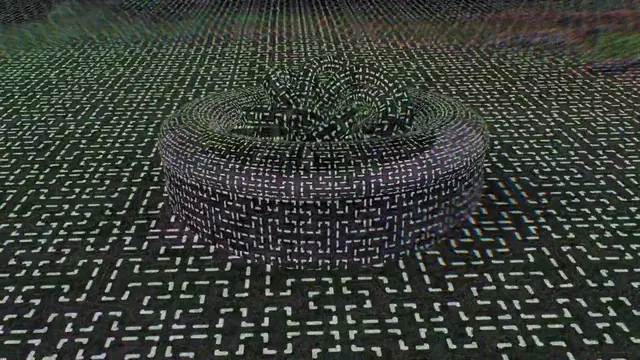
The geometry present with smokeable DMT is often considered to be the most profoundly intricate and complex set of visual geometry found within the entirety of the psychedelic experience. In comparison to orally active DMT (ayahuasca) they are significantly more digital in appearance and contain a colour scheme which is similar to LSD but a structured style that is closer to high dose psilocin.
Hallucinatory States
DMT produces a full range of high level hallucinatory states in a fashion that is more consistent and reproducible than that of any other commonly used psychedelic.
Auditory
See also: Psychedelic Intensity Scale, DMT guide, Effects of psychedelics (visual, cognitive, miscellaneous)

Pharmacology
Pharmacodynamics
DMT acts primarily through agonism at the serotonin 5-HT2A receptor, which is considered the principal mediator of its psychedelic effects.citation needed It has been characterized as a partial and biased agonist at this site, activating the Gq signaling pathway without significantly recruiting β-arrestin2. DMT also acts as an agonist at 5-HT1A and 5-HT2C receptors and shows broad, non-selective binding across numerous additional serotonin subtypes.2 It is additionally a potent serotonin releasing agent and functions as an agonist at sigma-1 and trace amine-associated receptor 1 (TAAR1), with further affinity demonstrated at dopamine D1, adrenergic, and imidazoline-1 receptors.citation needed
Pharmacokinetics
DMT is rapidly metabolized by monoamine oxidase A (MAO-A), rendering it orally inactive unless combined with a monoamine oxidase inhibitor.citation needed The primary metabolic product is indole-3-acetic acid, with DMT-N-oxide as a notable secondary metabolite. Additional pathways include N-dealkylation and cyclization to β-carbolines. To a lesser extent, CYP2D6 and CYP2C19 contribute to hepatic metabolism; when smoked, a more substantial fraction (possibly 10–20%) is processed through these enzymes. Following intravenous administration, DMT has a plasma half-life of approximately 9–12 minutes and can become undetectable in blood within about one hour. DMT readily crosses the blood-brain barrier and has been observed to accumulate in brain tissue following peripheral administration in animal models.2
Dangerous
Highest riskThese combinations are considered extremely harmful and should always be avoided. Reactions to these drugs taken in combination are highly unpredictable and have a potential to cause death.
Unsafe
AvoidThere is considerable risk of physical harm when taking these combinations, they should be avoided where possible.
Caution
Use cautionThese combinations are not usually physically harmful, but may produce undesirable effects, such as physical discomfort or overstimulation. Extreme use may cause physical health issues. Synergistic effects may be unpredictable. Care should be taken when choosing to use this combination.

Tolerance
Tolerance timelines are rules of thumb, not exact schedules, and vary widely between individuals and use patterns.
Tolerance to DMT develops minimally or not at all with repeated use. Studies involving multiple administrations at half-hour intervals, as well as twice-daily dosing over five days, found no significant tolerance development to autonomic or cardiovascular effects. Some subjects reported diminished subjective 'high' with repeated use, though others maintained full responses.
Serotonergic psychedelics (limited; research from the 1970s found LSD-tolerant individuals showed minimal cross-tolerance to DMT)
When using smoked DMT, waiting at least one hour between sessions is recommended to allow any minor tolerance effects to subside, though the substance can generally be used multiple times in a single day without significant tolerance buildup.
Harm Potential
Addiction & Dependence
Psychological
Extremely LowDMT is considered non-addictive with low abuse potential.citation needed Many users report a self-regulating quality to the substance, and studies examining substance use disorder found almost no hallucinogens produced dependence.
Physical
Extremely LowNo physical dependence or withdrawal syndrome has been documented with DMT use.citation needed The physiological dependence potential appears minimal when used infrequently.
Toxicity
Psychosis Risk
DMT can trigger psychological reactions including intense fear, paranoia, anxiety, panic attacks, and substance-induced psychosis, particularly in predisposed individuals.citation needed Latent psychoses may be triggered, and permanent disturbances in self- and reality-recognition are possible in vulnerable populations. Case reports describe temporary psychotic episodes that typically resolved within weeks, though individuals with personal or family history of psychotic illness appear at elevated risk.
Seizure Risk
Seizure risk from DMT alone appears minimal; documented seizure concerns primarily involve drug combinations, particularly with lithium or tramadol.citation needed
History & Culture
Traditional Use
DMT has been used as an entheogen in South America for thousands of years,citation needed primarily in the form of ayahuasca brews and snuffs. Archaeological evidence suggests snuff use dating back several millennia, though DMT typically served as a minor constituent in these…
Legality
International
UN Convention on Psychotropic Substances 1971 (Schedule I)
By Country
Illegal32
 United StatesIllegal
Controlled under the Controlled Substances Act of 1970.55 Classified as having high abuse potential with no accepted medical use. However, in 2006 the Supreme Court ruled that the União do Vegetal (UDV) church could use their ayahuasca brew for religious purposes despite DMT's Schedule I status, based on the 1993 Religious Freedom Restoration Act.56
By state
All other US states, D.C., and territories not listed above control DMT consistently with its federal Schedule I status under the Controlled Substances Act.
 ColoradoDecriminalized
Colorado permits adults twenty-one and older to possess, use, cultivate, manufacture, transport, obtain, and share dimethyltryptamine for personal use without remuneration. DMT remains listed in Colorado Schedule I, but the Natural Medicine Health Act removes criminal penalties for authorized personal use. Commercial sale and other conduct outside the personal-use and licensed-program rules remain regulated or prohibited.
 District of ColumbiaRestricted
The District of Columbia lists dimethyltryptamine in Schedule I. It nevertheless directs the Metropolitan Police Department to treat qualifying noncommercial adult activity involving entheogenic plants and fungi that naturally contain DMT as among its lowest enforcement priorities. The policy does not decriminalize isolated DMT or remove DMT from Schedule I.
 AustraliaIllegal
Poisons Standard June 202642
N,N-dimethyltryptamine (DMT) is listed in Schedule 9 of the Poisons Standard. Schedule 9 covers substances whose manufacture, possession, supply, and use should be prohibited except for approved medical, scientific, analytical, teaching, or training purposes.
 AustriaIllegal
Suchtgiftverordnung25
DMT is listed in Anhang V, section V.1, of the Suchtgiftverordnung as a substance in Annex I to the 1971 Convention and is consequently a Suchtgift under the Suchtmittelgesetz. The listing also covers its isomers, salts, esters, ethers, molecular compounds, and preparations, subject to the stated analytical and diagnostic exception.
 BelgiumIllegal
Dimethyltryptamine (DMT) is listed in Annexe IIA to the Royal Decree of 6 September 2017, which incorporates substances in Table I of the 1971 Convention. It is regulated as a psychotropic substance, so production, trade, possession, and use require the authorisations specified by the decree.
 BrazilIllegal
DMT is listed in Lista F2 of Portaria SVS/MS No. 344/1998, the list of psychotropic substances of prohibited use in Brazil. CONAD Resolution No. 1 of 25 January 2010 establishes procedures compatible with religious ayahuasca use; it does not remove DMT from Lista F2.

 ChileIllegal
N,N-dimetiltriptamina (DMT) is classified by Article 1 of Supreme Decree No. 867 as a narcotic or psychotropic substance covered by Law No. 20,000. The decree identifies the listed substances as capable of producing physical or psychological dependence and serious toxic effects or considerable harm to health.
 ColombiaIllegal
DMT is included in Lista I of the 1971 Convention text promulgated by Decree No. 120 of 1992. For Lista I substances, Article 7 requires parties to prohibit all use except authorized scientific use and very limited medical use, subject to special authorization and strict supervision.
 Czech RepublicIllegal
DMT is expressly listed as a psychotropic substance in List 4 of Government Regulation No. 463/2013 Coll., which has applied since 1 January 2014. The Addictive Substances Act requires a permit for acquisition, storage, manufacture, processing, supply, use, purchase, and sale, and confines List 4 substances to limited research, scientific, and very limited therapeutic purposes specified in that permit. Unauthorized manufacture, import, export, sale, supply, or storage for another is punishable by one to five years’ imprisonment; unauthorized personal possession in a quantity greater than small is punishable by up to two years’ imprisonment.
 DenmarkIllegal
 FranceIllegal
Arrêté du 22 février 1990 fixant la liste des substances classées comme stupéfiants17
DMT, also named N,N-diméthyltryptamine, is classified as a narcotic substance by the Arrêté du 22 février 1990. Its manufacture, possession, supply, importation, and use are prohibited except where authorised under the controlled-substances regime.

 IndiaIllegal
Narcotic Drugs and Psychotropic Substances Act, 19857
N,N-dimethyltryptamine is listed in the Schedule to the Narcotic Drugs and Psychotropic Substances Act, 1985 as a psychotropic substance. Section 8 prohibits production, manufacture, possession, sale, purchase, transport, warehousing, use, consumption, import, and export except for medical or scientific purposes and as authorized by the Act.
 IrelandIllegal
N,N-Dimethyltryptamine is a designated controlled drug in the Schedule to the Misuse of Drugs Act 1977 (Controlled Drugs) (Designation) Order 2022. The order also covers substances structurally derived from tryptamine by N-alkyl substitution, and the Misuse of Drugs Act restricts controlled-drug possession and supply except as authorised.
 ItalyIllegal
Decreto del Presidente della Repubblica 9 ottobre 1990, n. 3098
DMT (N,N-dimetiltriptamina) is listed in Tabella I of the controlled-substances tables under the Decreto del Presidente della Repubblica n. 309 of 1990. The table classifies it among narcotic and psychotropic substances subject to the Act's controls on production, possession, and distribution.
 JapanIllegal
Cabinet Order Designating Narcotics, Narcotic Raw Material Plants, Psychotropics and Narcotic and Psychotropic Raw Materials (Cabinet Order No. 238 of 1990)910
DMT and its salts are designated as narcotics under the Cabinet Order made under the Narcotics and Psychotropics Control Act. The designation subjects manufacture, import, export, possession, and other handling to the Act's narcotics controls.
 MexicoIllegal
Ley General de Salud18
DMT is included in Group I of Article 245 of the Ley General de Salud. Article 248 prohibits the acts described in Article 247 in relation to Group I substances, while Article 249 permits acquisition only when authorized for scientific research.
 NetherlandsIllegal
Opiumwet45
N,N-dimethyltryptamine (DMT) is listed in Lijst I of the Opiumwet. The Act prohibits the manufacture, sale, supply, transport, import, export, and possession of List I substances except as authorised.

 PhilippinesIllegal
DMT is included in Schedule I of the Comprehensive Dangerous Drugs Act of 2002. The Act prohibits unauthorized importation, sale, administration, delivery, distribution, transportation, manufacture, possession, and use of dangerous drugs.
 PolandIllegal
Rozporządzenie Ministra Zdrowia w sprawie wykazu substancji psychotropowych, środków odurzających oraz nowych substancji psychoaktywnych21
DMT (N,N-dimetylotryptamina) is classified as a psychotropic substance in group I-P under the Minister of Health regulation implementing the Act on Counteracting Drug Addiction. The regulation places the substance in the statutory controlled-substance system, under which unauthorised possession, manufacture, and trade are prohibited.
 RussiaIllegal
Government Resolution No. 681 of 30 June 199822
DMT is listed in List I of Government Resolution No. 681, the list of narcotic drugs, psychotropic substances, and precursors subject to control in the Russian Federation. The listing expressly covers DMT derivatives unless they are separately named in the list.

 South KoreaIllegal
DMT is listed in Schedule 3 of the Enforcement Decree of the Narcotics Control Act as a psychotropic drug under Article 2(3)(a). This category covers substances with a high risk of abuse that are not used medically, and their handling is subject to the Act's strict narcotics controls.
 SpainIllegal
Real Decreto 2829/1977, de 6 de octubre11
DMT is listed as dimetiltriptamina in Lista I of the psychotropic-substances schedules annexed to Real Decreto 2829/1977. The decree regulates and subjects the manufacture, distribution, prescription, and dispensing of listed psychotropic substances to control.
 SwitzerlandIllegal
Betäubungsmittelverzeichnisverordnung (BetmVV-EDI)52
N,N-DMT is listed in Verzeichnis d of Annex 5 to the Betäubungsmittelverzeichnisverordnung, placing the substance and preparations containing it under narcotics control. Plants that contain N,N-DMT are not themselves listed in the ordinance; the classification of a plant extract or other preparation is determined case by case by the competent cantonal authority.
 ThailandIllegal
ประกาศกระทรวงสาธารณสุข เรื่อง ระบุชื่อวัตถุออกฤทธิ์ในประเภท ๑ พ.ศ. ๒๕๖๕ (Notification of the Ministry of Public Health, Specifying Names of Psychotropic Substances in Category 1, B.E. 2565)3738394041
DMT is expressly listed as a Category 1 psychotropic substance under the Ministry of Public Health notification published in the Royal Gazette on 5 August 2022; that notification entered into force after 30 days. Unauthorised manufacture, import, export, sale, or possession is punishable by up to 10 years’ imprisonment and a fine of up to THB 1,000,000. Use is punishable by up to one year’s imprisonment, a fine of up to THB 20,000, or both.
 TurkeyIllegal (analog/blanket ban)
26/1/2015 tarihli ve 2015/7238 sayılı Bazı Maddelerin 2313 Sayılı Uyuşturucu Maddelerin Murakabesi Hakkında Kanun Hükümlerine Tabi Tutulması Hakkında Karar2324
Since 6 February 2015, N,N-dimethyltryptamine (DMT) is covered by the broad tryptamine-derivatives annex to Decision No. 2015/7238, which subjects the listed substances to Law No. 2313 on the Control of Narcotic Drugs. The class covers 2-(1H-indol-3-yl)ethanamine derivatives whose two amino substituents may each be an alkyl group of up to four carbons, including DMT’s two methyl groups. Article 188 of the Turkish Penal Code criminalizes unlicensed manufacture, import, export, sale, supply, transport, storage, purchase, acceptance, and possession of narcotic or stimulant substances; Article 191 separately criminalizes purchase, acceptance, possession, or use for personal use.
 UkraineIllegal
Resolution of the Cabinet of Ministers No. 770 of 6 May 200034
DMT is listed in List No. 2 of Table I of Ukraine's List of Narcotic Drugs, Psychotropic Substances and Precursors. This table designates especially dangerous psychotropic substances whose circulation is prohibited.
 United Arab EmiratesIllegal
DMT is listed by the UAE Government as a Psychotropic Schedule I substance and is marked prohibited. Federal Decree-Law No. 30 of 2021 prohibits bringing in, importing, exporting, manufacturing, producing, possessing, using, and other dealings in narcotic drugs and psychotropic substances, subject to regulated medical and scientific exceptions.

References
Source Pages


Citations
Further Reading
 Chacruna - DMT and serotonin syndrome risks
 dos Santos et al. - Ayahuasca risks review (2016)
 Mind Foundation - Psychedelic-Antidepressant Interactions
- Nichols DE - Psychedelics review (2016)
 PMC: Drug-drug interactions involving classic psychedelics
- PubChem: N,N-Dimethyltryptamine (CID 6089)
- Spiers et al. - Continuous DMT infusion study (2024)
 Spirit Pharmacist - Healing States or Serotonin Toxicity
- Strassman RJ - Dose-response study in humans (1994)
- Timmermann et al. - DMT models near-death experience (2018)
Article Status
 Step 1 · Automated synthesis
An autonomous workflow built by Josie Kins compiled this article's foundation from information published across the web.
- LStep 2 · First-pass review
A first pass manual review and edit of article prose and copy has been performed by subject-matter expert Lyrea. This does not guarantee factual accuracy. An additional human review for each of this article's citations is yet to be performed.
- Step 3 · Citation reviewPending
No one has reviewed this article's citations yet. That second pass checks each claim against the source it cites.
Suggest an edit
Spotted a mistake, an outdated claim, or something missing from the DMT article? Send the editors a private note. Feedback lands in a moderation queue and is never shown on the site.
Wish to give generalised feedback? You can do so here.